Why are people choosing to import textiles from Egypt?
Global textile sourcing is undergoing a structural transformation. Rising logistics uncertainty, tariff pressure, and supply chain risks are pushing international buyers to rethink where and how their products are manufactured. Against this backdrop, establishing an Egypt textile factory is no longer just an expansion decision — it is a strategic response to the future of global trade.
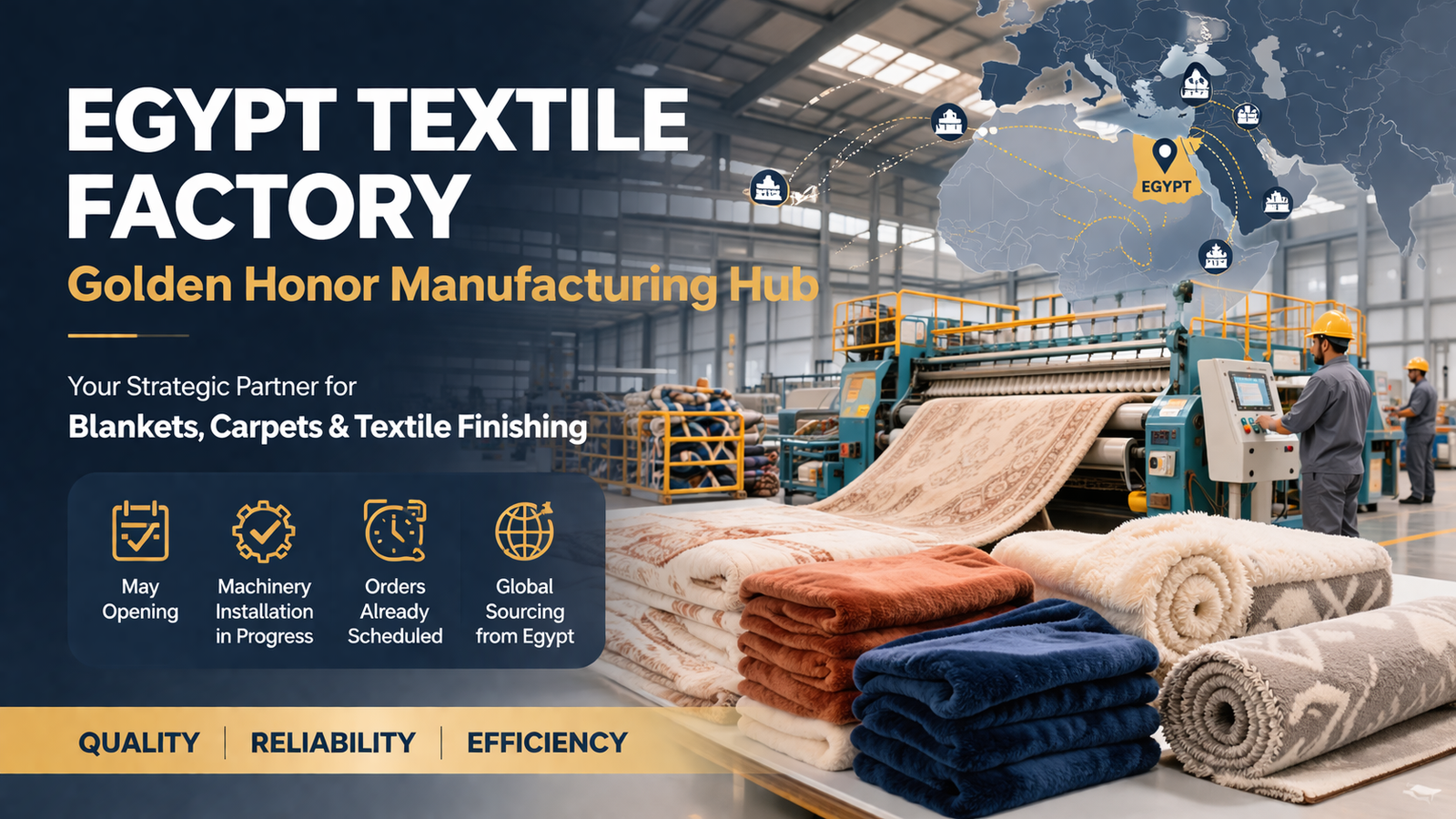
Golden Honor’s new Egypt textile factory represents exactly this shift. Located in West Qantara Industrial City near the Suez Canal, the facility is entering its final construction phase, with machinery installation currently underway and full operation scheduled for May. Even before official completion, production capacity has already attracted confirmed international orders, and scheduling is actively being arranged.
For brands, wholesalers, and importers planning Fall/Winter production cycles, now is the ideal moment to understand why sourcing from an Egypt textile factory is becoming one of the most competitive decisions in the global textile industry.
Why the Global Textile Industry Is Moving Toward an Egypt Textile Factory Model
Over the past decade, sourcing strategies have evolved from single-country dependence toward diversified manufacturing networks. Buyers are no longer asking only about price; they are asking about resilience, delivery stability, and geopolitical safety.
An Egypt textile factory offers a unique combination rarely found elsewhere: geographic advantage, trade agreement access, competitive labor cost, and proximity to major consumption markets.
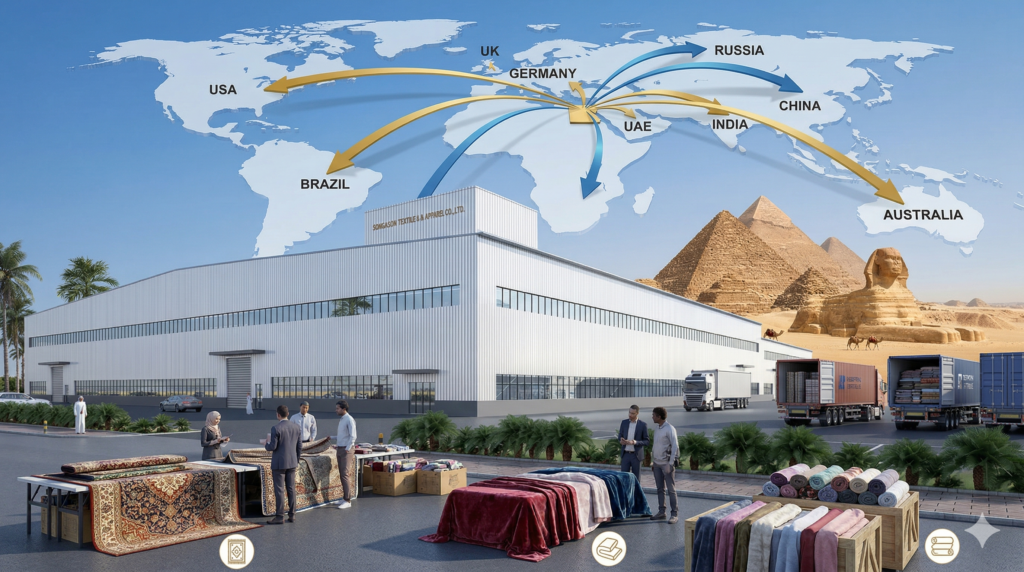
Egypt sits at the crossroads of Europe, the Middle East, and Africa. Products manufactured in an Egypt textile factory can reach European ports significantly faster than shipments departing from East Asia. At the same time, exporters benefit from multiple preferential trade agreements that reduce or eliminate tariffs for key destinations.
For importers facing fluctuating freight rates and shipping disruptions, this geographic positioning dramatically lowers supply chain risk.
Golden Honor Egypt Textile Factory — Project Overview
Golden Honor is designed as a specialized Egypt textile factory focusing on textile finishing and finished home textile manufacturing rather than upstream fiber production. This strategic positioning allows faster scalability and flexible order handling.
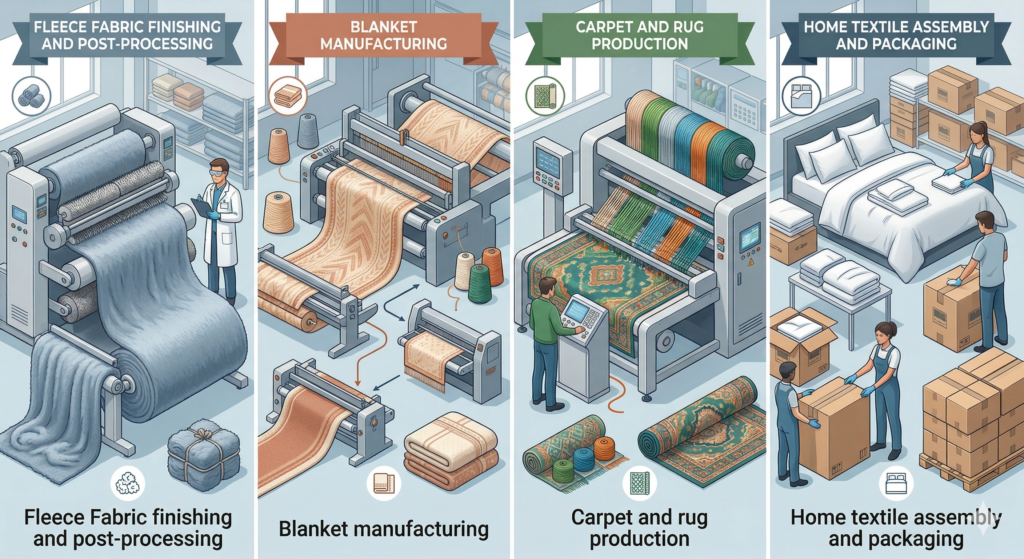
The facility’s main operational scope includes:
- Fleece Fabric finishing and post-processing
- Blanket manufacturing
- Carpet and rug production
- Home textile assembly and packaging
Unlike traditional factories that attempt to cover every production stage, Golden Honor Egypt textile factory concentrates on high-value finishing processes where quality control and efficiency matter most.
Machinery is currently being installed, production lines are undergoing calibration, and initial workforce training programs are already in progress. With confirmed orders already scheduled, early production capacity is filling quickly — a clear signal that global buyers are actively shifting sourcing toward Egypt.
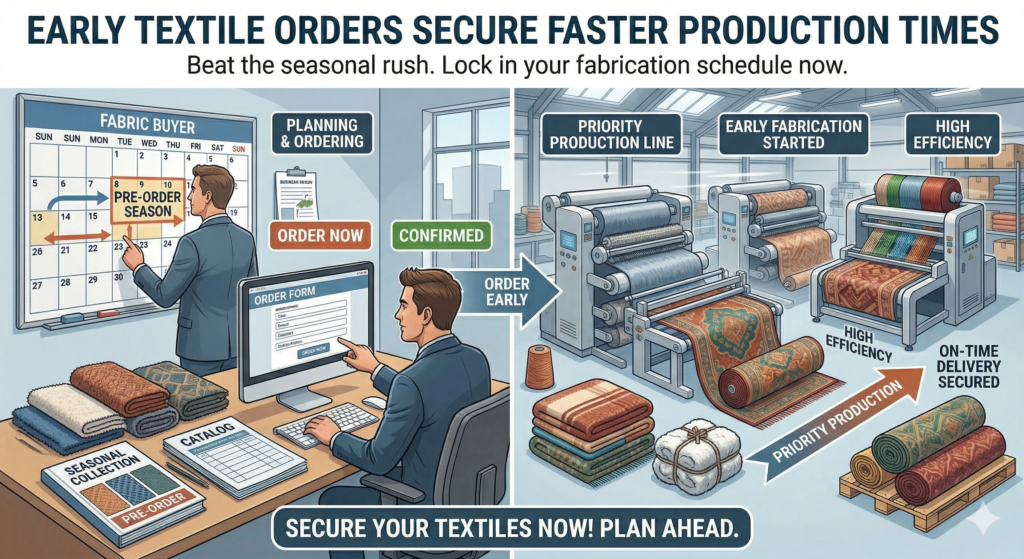
Why Buyers Benefit from Ordering Early from an Egypt Textile Factory
Many importers underestimate how quickly a new manufacturing base reaches full capacity. Once an Egypt textile factory begins operation, early adopters typically secure the most flexible timelines, pricing advantages, and customization resources.
Ordering early provides several strategic advantages.
First, production scheduling remains flexible before peak season congestion begins. Buyers can adjust specifications, packaging, and delivery timelines more easily during the ramp-up phase.
Second, early partners often gain priority allocation when capacity becomes constrained. Textile manufacturing is seasonal, and once Fall/Winter blanket production accelerates, lead times naturally extend.
Third, collaboration during early production helps factories optimize processes according to client requirements, creating long-term efficiency benefits for repeat orders.
Golden Honor Egypt textile factory is currently entering exactly this early partnership window.
Manufacturing Capabilities of the Golden Honor Egypt Textile Factory
The factory focuses on downstream value creation — transforming fabrics into finished products ready for global retail distribution.
Production categories include fleece blankets, decorative home textiles, and floor products designed for international markets. Emphasis is placed on consistency, scalable output, and export-ready packaging.
Blanket manufacturing integrates cutting, sewing, quilting, inspection, and packing within a unified workflow. Carpet and rug production similarly emphasizes finishing precision and durability testing.
Because this Egypt textile factory works closely with upstream fabric production partners in China, buyers benefit from a vertically coordinated supply chain that combines material innovation with regional manufacturing advantages.
Tariff Advantages of an Egypt Textile Factory
One of the most powerful reasons global distributors choose an Egypt textile factory is tariff efficiency.
Egypt maintains multiple free trade agreements granting preferential or duty-reduced access to markets across Europe, the Middle East, and Africa. For many buyers, tariff savings alone can significantly offset rising logistics costs seen in recent years.
When importing from an Egypt textile factory, companies may achieve:
- Reduced import duties
- Improved landed cost predictability
- Stronger price competitiveness in retail markets
In an era where freight volatility and inflation pressure margins, tariff optimization has become a central sourcing strategy rather than a secondary consideration.
Labor and Operational Efficiency in an Egypt Textile Factory
Labor cost remains an important but often misunderstood factor. The advantage of an Egypt textile factory is not simply lower wages — it is the balance between cost efficiency and workforce stability.
Egypt’s textile workforce has deep historical roots, supported by decades of industry development. Skilled operators adapt quickly to finishing and sewing processes, allowing consistent quality while maintaining competitive production costs.
Lower operational expenses enable manufacturers to allocate more resources toward quality control, equipment upgrades, and production management — areas directly impacting buyer satisfaction.
Strategic Logistics Advantages Near the Suez Canal
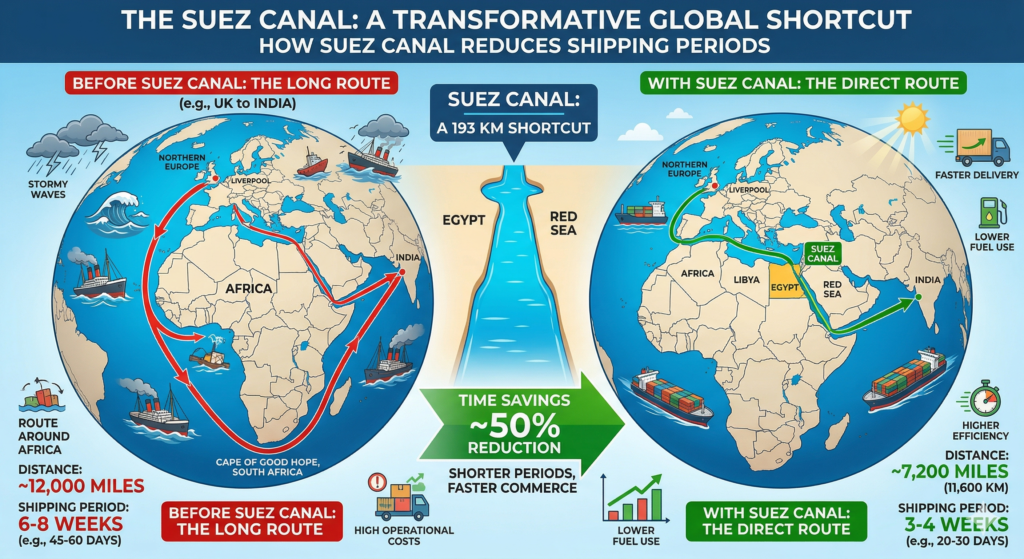
Location defines logistics performance. Golden Honor’s Egypt textile factory sits near one of the world’s most important maritime corridors: the Suez Canal.
This positioning allows faster transit times to Europe compared with East Asian shipments while maintaining efficient access to Middle Eastern and African markets.
Reduced sailing distance translates into:
- Shorter delivery cycles
- Lower fuel exposure
- Reduced shipping uncertainty
- Improved inventory planning
For brands operating seasonal product launches, even a one-week reduction in delivery time can significantly impact sell-through performance.
China + Egypt Dual Manufacturing Strategy
Golden Honor operates within a broader dual-manufacturing ecosystem combining Chinese material expertise with Egyptian finishing capabilities.
China remains essential for innovation, fabric development, and large-scale textile engineering. The Egypt textile factory complements this by providing cost-efficient final manufacturing closer to destination markets.
This hybrid model allows buyers to balance quality, cost, and logistics simultaneously — something increasingly difficult within single-country sourcing strategies.
Global Market Trends Supporting Egypt Textile Factory Growth
Recent global trade trends strongly support the rise of Egypt as a textile manufacturing hub. Buyers are diversifying supply chains to reduce geopolitical exposure and shipping risk.
Near-market manufacturing is becoming a long-term strategy rather than a temporary adjustment. An Egypt textile factory fits perfectly into this transformation by offering geographic neutrality and trade flexibility.
As more brands adopt multi-origin sourcing models, early collaboration with emerging production bases provides a significant competitive edge.
Production Timeline and Order Scheduling
Golden Honor’s Egypt textile factory is scheduled for operational launch in May, with machinery installation already underway. Trial production will begin shortly before full commercial output.
Because confirmed orders are already in queue, buyers planning upcoming seasons are strongly encouraged to secure production windows early.
Advance scheduling ensures stable delivery timelines and allows technical teams sufficient preparation time for customized requirements.
Why Now Is the Right Time to Work with an Egypt Textile Factory
Every supply chain shift has a timing window. Buyers who move early typically gain the greatest operational advantage.
Choosing an Egypt textile factory today means entering production during its most flexible phase — before capacity constraints emerge and before industry-wide adoption drives demand higher.
Golden Honor invites global partners to explore collaboration opportunities during this launch period.
Conclusion: A New Chapter for Global Textile Manufacturing
The launch of Golden Honor marks more than a new facility; it represents a new sourcing philosophy built around flexibility, efficiency, and geographic balance.
An Egypt textile factory is no longer an alternative option — it is becoming a central pillar of modern textile sourcing strategy.
As machinery installation progresses and production approaches, now is the optimal time for buyers to plan orders, establish partnerships, and secure future capacity.
FAQ — Egypt Textile Factory
When will the Egypt textile factory begin production?
Full operation is expected in May following machinery installation and testing.
What products are manufactured?
Blankets, carpets, rugs, and textile finishing services.
Why import from an Egypt textile factory?
Tariff advantages, faster delivery routes, and diversified sourcing stability.
Should buyers place orders before opening?
Yes. Early scheduling ensures production priority and flexible timelines.